The dark secret behind Gen Z's obsession with analog and the 80s
Axel Robellada
Partager
The "Anemoia" Phenomenon: Why Gen Z nostalgia is driving an obsession with an '80s/'90s era they never lived through
Exploring the "Dark Secret" behind the rise of fake Gen Z nostalgia and the digital generation's desperate search for analog authenticity in 2025 .
In late 2025, if you walk down any busy street, you might feel time has folded. New York, Austin, and Los Angeles all carry this strange sensation. On one corner, a teenager is rocking neon-pink leg warmers and an oversized blazer. The shoulder pads look straight out of 1984. On the other, someone is wearing jeans so baggy they could double as a parachute. They’re paired with a vintage Walkman clipped to their belt. It’s not a costume party. It’s daily life.
We are witnessing the absolute peak of Anemoia. It’s a psychological term defining nostalgia for a time never personally known. Gen Z was born into a world of fiber optics, predictive algorithms, and AI-generated everything. They are looking back at the late 20th century as peak human experience. Specifically, they glorify the 1980s and 1990s. But what exactly are they hunting for in the bins of thrift stores? Is this just a cyclical fashion trend? Or is it a symptom of something much deeper? Perhaps it’s even a dark secret within our hyper-connected, 8K-resolution society.
1. The Neon & Denim Shield: Fashion as Cultural Resistance
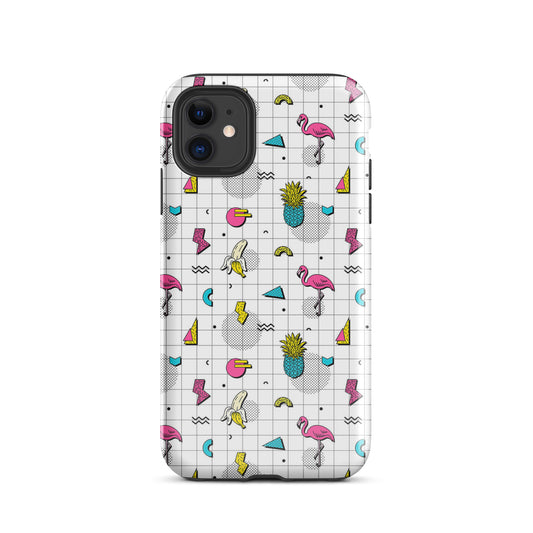
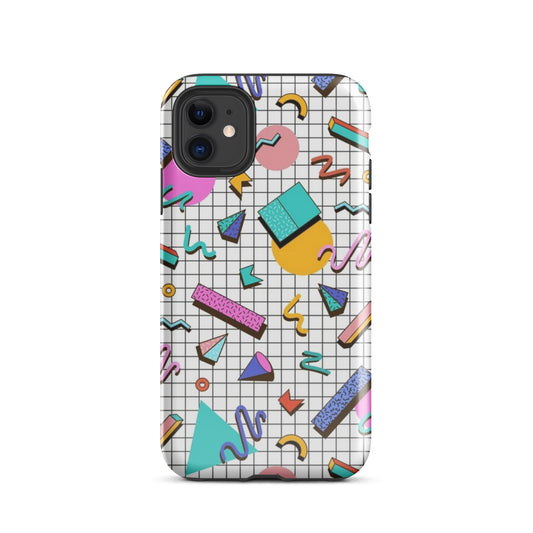
The most visible layer of this revival is, of course, the aesthetic. But look closer. This isn't just a copy-paste of the past. It’s an idealized, high-definition remix. In the 1980s, fashion was about maximalism and the more is more philosophy. It was the era of neon spandex, big hair, and iconic bold silhouettes. Everything screamed for attention. Then came the 90s, pivoting into Grunge and oversized streetwear. It brought a deliberate I don't care attitude that rejected the previous decade’s gloss.
For today’s youth, this clothing acts as physical and psychological armor. We live in 2025, an era of exhausting visual perfection. Social media platforms impose a relentless, 24/7 standard of flawlessness. Every pore is scrutinized; every outfit becomes a data point. In this context, hiding under a neon windbreaker from 1988 feels radical. So does a three-sizes-too-large hoodie from 1996. Both become acts of liberation. It’s a way to say, I am not a pixelated product.
The resurgence of "Mom jeans," windbreakers, and even the once-hated shoulder pads is a fascinating paradox. We are witnessing a generation wearing exactly what their parents likely threw into a donation bin in 2005. They are seeking a physical comfort and a distinct identity that the digital world—with its "blandified" global trends—simply cannot provide. When everything is digital, the texture of a vintage denim jacket feels like a luxury.
2. The Fetish of the Obsolete: Why 8K is Losing to VHS
Perhaps the most striking part of this revival isn't the clothes, but the hardware. If you actually lived through the '80s or '90s, you remember the struggle. You remember the horror of taking a 24-exposure roll of film to a 1-hour photo lab. Later, you’d realize your thumb was over the lens in half the shots. You also remember the frustration of a VCR eating your favorite tape.
So why are 20-year-olds in 2025 scouring eBay for 2-megapixel digital cameras from 2003 or "deadstock" Sony Walkmans? The answer is simple: instant gratification has become boring.
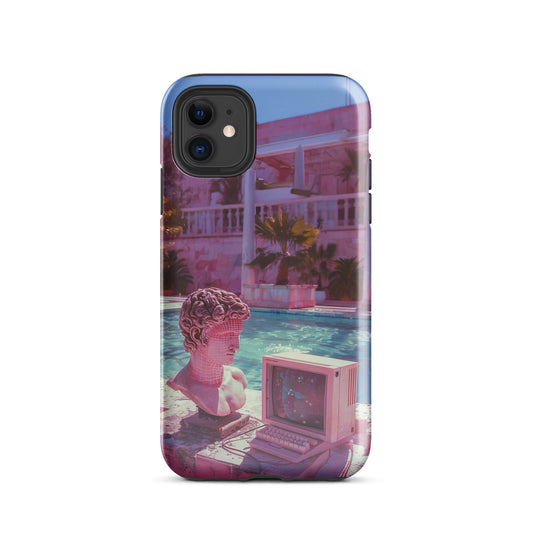
When you can take 1,000 perfect, AI-enhanced photos in a second, each photo loses its soul. Gen Z is searching for the "Analog Error." They want the light leaks of a cheap film camera. They crave the grainy mystery of a VHS tape. They want the tactile click of a physical button. There is a specific, almost spiritual mystery in the sound of a dial-up modem. The mechanical whir of a Game Boy carries that same mystery. These aren't just gadgets; they are artifacts from another technological mindset. They belong to an era where technology was a tool you used. It was not a cage you lived in.
3. Synthesizers and Distorted Guitars: The Sound of Freedo
Flip through any 2025 viral playlist and you’ll hear it. The heavy, reverb-soaked drums of the 80s are everywhere. So are the raw, distorted guitar riffs of the 90s. From Synthwave to the Grunge Revival, late 20th-century music is everywhere again. It feels more relevant than ever. Kurt Cobain has evolved from rock icon into near-religious symbol. He speaks to a generation that feels the same disillusionment he sang about in 1991.
There’s also the 80s side. It shows up in the obsession with Stranger Things-esque synthesizers and New Wave melodies. Why does this sound resonate so deeply? Because that music sounds like possibility. The 80s were about the future. The 90s were about the reality of that future. Today’s youth are caught in between these two visions. They want a soundtrack that feels more substantial than over-polished pop. Algorithm-optimized hits of the 2020s often feel hollow by comparison.
This explains the massive return to physical media. In 2025, you subscribe to your life and license your joy. Owning a vinyl record or a cassette tape becomes an act of defiance. It’s a defiant act of ownership. Teens want to touch the music and feel its weight. They want to read the liner notes slowly. They want a physical collection on a shelf that expresses identity. It should say something real about who they are. They want something that won't disappear if a streaming service loses a licensing deal.
4. Mall Culture & Central Perk: The Loss of the "Third Place"
Why do shows like Stranger Things, Friends, or Seinfeld continue to dominate streaming charts? If you ask a young person in 2025, they’ll tell you about the "Third Place." In the 80s, it was the neon-lit Shopping Mall. In the 90s, it was the local coffee shop (Central Perk). It was a place you went just to be.
In the 80s and 90s, the biggest drama for friends was simple. Sometimes, someone didn't show up at the designated time and place. There was no ghosting via iMessage or similar apps. There was no checking an ex’s Instagram stories to see their location. There was constant physical presence. If you wanted to talk to someone, you had to call their house. You also had to hope their parents didn't pick up.
That narrative slowness is deeply appealing today. Just sitting on a couch and talking for hours feels revolutionary now. Doing it without a screen in sight is even more radical. It’s a balm for over-stimulated, dopamine-fried minds of the 21st century. It’s not just a TV show; it’s a social blueprint. It models a kind of social life many feel they’ve lost. Additionally, cinema from this era represents the peak of practical effects. Think of The Goonies, Back to the Future, or Jurassic Park. There is a tactile nature to a giant animatronic T-Rex on set. Modern, sterile CGI simply cannot match that presence. It feels real because it was real.
5. The "Dark Secret": Anemoia as a Survival Mechanism
So, what is the "dark secret"? It’s the realization that Gen Z isn't just "playing dress-up." This obsession with the 80s and 90s is a **survival mechanism**. We are living in the first age of Digital Exhaustion. Everything is tracked. Everything is permanent. Everything is curated.
The 80s and 90s represent the "Last Summer of Analog Humanity." It was a window where technology felt balanced. We had modern tools but retained privacy. There were color TVs, portable music, and early internet access. Yet we still kept our sense of mystery. You could go out for the day and be truly unreachable. You could make a mistake and it didn't follow you forever. It wouldn’t live on some distant cloud server. This is the secret Gen Z has discovered. They don't actually want 80s and 90s technology itself. They want the freedom that came with that era.
Conclusion: Re-imagining the Future by Re-winding the Past
Ultimately, this obsession isn't about wanting to live in a world without the internet. It’s about rescuing the human values of an era that felt more grounded. It’s about the desire to possess something physical in a digital void. It’s about the need for "imperfection" in a world of AI-driven precision.
If you lived through the '80s or '90s, resist the urge to roll your eyes. Don’t sneer at the teen with the oversized denim jacket or vintage polaroid. They are paying you the highest possible compliment. They are trying to capture a bit of the magic you once knew. It’s the magic we once took completely for granted. It’s the magic of being truly, undeniably, and unpluggedly present.
Ready to claim your own piece of the Analog Era?
Don't settle for fast-fashion imitations. Explore the authentic spirit of the '80s and '90s with our curated collections.
Explore the inUsuwall 80s/90s Collection
What do you miss most about the '80s or '90s? Is it the music, the fashion, or the feeling of being "unplugged"? Let us know in the comments below!